service@chemindustry.com

|
 |
|
|
|
 |
News Details |
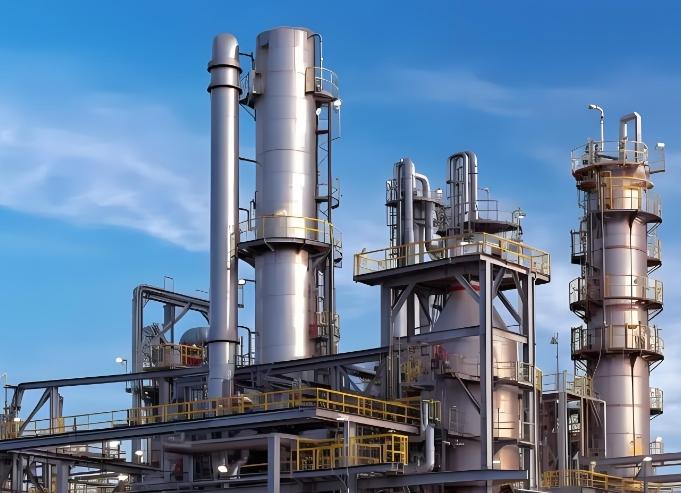
With the concentrated release of new production capacity both domestically and overseas, the pressure of supply and demand imbalance in the global petrochemical industry continues to intensify, and the trend of overcapacity has already spread to the U.S. homeland, which possesses energy and raw material advantages.
In the past year, four leading chemical companies, INEOS Styrenution, AmSty, Stepan, and Westlake Chemical, have successively announced the shutdown of multiple production units. The targets of this round of shutdowns are all old production lines that have been in operation for decades and lack upstream and downstream integration support. Polystyrene (PS), PVC, Styrene, and surfactants have become key areas for capacity clearing.
Industry data shows that the global PS operating rate has already fallen below 70% in 2022, and institutions predict that the industry pattern of low operating rates may continue until 2034; ICIS also warns that if the Strait of Hormuz maintains normal navigation, massive chemical supplies from the Middle East and Asia will continue to flow into the global market, further exacerbating the industry's overcapacity contradiction.
I. Four major U.S. chemical companies intensively shut down old units, with multiple production lines exiting operation
1. INEOS Styrenution: Illinois PS plant scheduled for permanent shutdown in Q4 2026
In June 2026, INEOS Styrenution officially announced that it will permanently shut down its Polystyrene (PS) production plant located in Channahon, Illinois, USA. All shutdown work, including equipment dismantling, will be completed in the fourth quarter of 2026.
The plant started operations in 1960 and has over 60 years of production history, with an annual PS capacity of 400,000 tons. The site lacks upstream Styrene integration support, and raw materials need to be purchased externally. Against the backdrop of continuous industry overcapacity and significantly compressed profits, operating costs remain persistently high.
Following this shutdown, the company will integrate its North American PS capacity, retaining only the integrated production bases in Alabama, USA, and Mexico to maintain operations. This shutdown involves approximately 100 on-site employees, and the company has simultaneously launched an employee placement assistance plan.
2. AmSty: Temporary shutdown of old PS unit in California, site to warehousing use, restart time undecided
AmSty, which also operates in the PS sector, has implemented a temporary shutdown of its old Polystyrene unit located in Torrance, California, USA.
This unit was commissioned in 1953, is far from upstream raw material bases, and does not possess the advantage of upstream and downstream supporting facilities. The company decided to convert the original production site into a PS storage and distribution terminal for storing Polystyrene products produced at other bases. As of now, no timetable for the unit's resumption of production has been announced.
3. Stepan: Shutting down multiple surfactant production lines in the U.S. in mid-2026
Stepan, a global leader in surfactants, released a capacity optimization plan in March 2026, implementing the "Catalyst Project" cost reduction plan. It explicitly stated that it will permanently shut down its surfactant production plant in Fieldsboro, New Jersey, USA, in mid-2026, and simultaneously scrap multiple production equipment sets at the Elwood, Illinois plant. Products include sulfonated, betaine, and specialty surfactants.
This capacity contraction is mainly due to the continued weakness in demand for commodity surfactants and the high maintenance costs of old units. The company is concentrating and integrating capacity into a new, highly efficient integrated production base in Texas, planning to achieve $100 million in pre-tax cost savings within two years.
4. Westlake Chemical: Shutting down multiple old non-integrated PVC and Styrene lines in December 2025
Westlake Chemical completed the shutdown of multiple old chemical units in December 2025, becoming one of the earlier companies in this round of U.S. chemical capacity clearing to materialize.
The targets of this shutdown include a 450,000 tons/year PVC production unit in Mississippi, supporting chlor-alkali and VCM units in Louisiana, and a Styrene production line.
The aforementioned units are all independent sites that have been in production for many years, lack self-produced raw material support, and have long-standing high logistics and raw material procurement costs. They have continued to incur losses under the global market conditions of PVC and Styrene overcapacity. The company simultaneously recorded a large goodwill impairment for its North American vinyl chloride business, optimizing the regional industrial layout by eliminating backward capacity.
II. Industry fundamentals continue to weaken: PS operating rates remain low for a long time, overcapacity cycle may extend to 2034
The concentrated shutdown of old chemical units in the U.S. this round stems from the supply and demand imbalance caused by the concentrated release of new global petrochemical capacity over the past three years. With the intensive commissioning of new projects in refining, chemical, and Styrene industry chains across Asia and the Middle East, market supply has expanded significantly, while the recovery in demand has fallen short of expectations, leading to a continuous decline in industry operating rates.
Public data shows that the global average operating rate for the Polystyrene (PS) industry fell below 70% in 2022, with the operating load of independent old units in North America lacking upstream and downstream support being even lower, and profit margins being continuously compressed.
Multiple industry research institutions predict that under the combined influence of factors such as the continuous release of new capacity, the impact of downstream alternative materials, and sluggish terminal demand, the market pattern of low operating rates and overcapacity in the global PS industry will likely continue until 2034. Old non-integrated units lacking cost advantages globally will continue to face capacity elimination.
III. ICIS Risk Warning: Navigation through the Strait of Hormuz will intensify global chemical overcapacity pressure
International chemical information agency ICIS issued an industry warning, stating that there is still a potential risk of further deterioration in the current global chemical overcapacity pattern. Once the Strait of Hormuz maintains normal navigation, bulk chemical commodities such as Polyethylene, Styrene, and PVC produced in the Middle East relying on low-cost energy advantages will continue to be sold in large quantities globally. Coupled with the stable outward shipment of goods from mature refining and chemical bases in Asia, high-cost old chemical capacity in Europe and the U.S. will continue to face the impact of low-priced imported goods. The operating pressure on non-integrated chemical units in the U.S. and Europe will continue to rise, and future industry capacity reshuffling and the shutdown of backward units may become a normalized phenomenon.
Industry analysts stated that this round of chemical capacity clearing in the U.S. is not merely a downturn in a single regional market, but a microcosm of the structural overcapacity of the global petrochemical industry. In the future, leading capacity possessing upstream and downstream integration, scale, and energy cost advantages will continue to squeeze the survival space of old independent units, and the global chemical industry may usher in a new round of capacity pattern reconstruction.
From:ChemNet
|
Recommended Suppliers |