service@chemindustry.com

|
 |
|
|
|
 |
News Details |
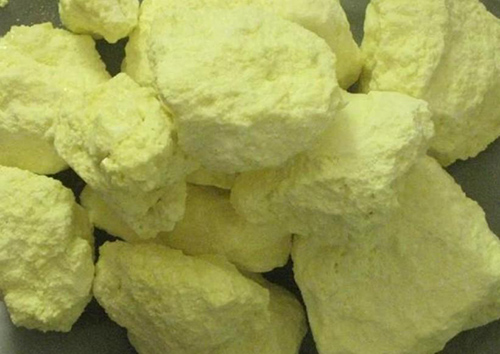
Recently, major Middle Eastern sulfur exporters such as Qatar, Kuwait, and the UAE have successively raised their official FOB offer prices for July sulfur. Coupled with rising sea freight and insurance costs, the cost of sulfur arriving in major Asian markets continues to climb, and the global sulfur spot market remains tight.
China has a high dependence on sulfur imports, with Middle Eastern sources accounting for a prominent share of total imports. Rising international prices will continue to transmit to the domestic industrial chain.
QatarEnergy: Announced the July Qatar Sulfur Official Price (QSP). The FOB prices at Ras Laffan and Mesaieed ports are set at $890/ton, an increase of $85 compared to June's $805/ton.
Referencing market freight rates on June 25, the freight for 30,000–35,000 DWT vessels shipping to Chinese ports ranges from $125 to $140/ton. A rough calculation puts the corresponding cost for the Chinese market at $1015–1030/ton. With additional costs such as shipping insurance, the terminal landing cost has room for further increases.
Kuwait Petroleum Corporation (KPC): Set the July Sulfur Price (KSP) at $950/ton FOB, a significant month-on-month increase of $145 from June, once again refreshing the historical record for KSP.
In comparison, this price is $460 higher than the $490/ton FOB in June 2022. As of July 2, the freight for vessels of the same tonnage shipping to Chinese ports is $108–116/ton, converting to a Chinese landed cost of $1058–1066/ton. Subsequent additional expenses will continue to push up import costs.
Abu Dhabi National Oil Company (ADNOC): Determined the July Official Selling Price (OSP) for sulfur for the Indian subcontinent at $1000/ton FOB at the Ruwais port, an increase of $140 from June, marking a new historical high.
Argus data shows the offer is $180–200 higher than the previous high of $800–820/ton FOB in June–August 2008. Based on the June 25 assessment, freight for 40,000–45,000 DWT vessels shipping to India's east coast is $105–108/ton, calculating the landed cost for the Indian region to reach $1105–1108/ton.
In terms of circulation, Argus monitoring data shows that shipping capacity through the Strait of Hormuz continued to recover in June. Over 800,000 tons of previously contracted Middle Eastern sulfur were shipped through the strait, mostly long-term contracts, which alleviated the extreme inventory pressure of major consuming countries to a certain extent. However, affected by factors such as delayed cargo delivery and overseas facility maintenance, the overall supply fundamentals have not loosened significantly. Currently, spot sulfur available for circulation from the Middle East in the hands of traders remains only 2–3 shiploads.
Market messages indicate multiple LNG vessels are docked at Ras Laffan Port waiting for operations. Previously, some of QatarEnergy's production facilities were damaged by a drone attack. The market generally expects QatarEnergy to gradually advance the maintenance and capacity restoration of facilities in the port area. The pace of subsequent cargo release remains to be observed.
Domestic sulfur production pattern: Mainly refining by-products, with capacity concentrated in leading enterprises
China has scarce natural sulfur mineral resources, and market supply relies mainly on by-product sulfur recovered from petroleum refining and natural gas purification. The industry's import dependence has long been at a high level, and the Middle East is China's most important source of imports. Domestic sulfur production capacity is highly concentrated, with leading refining enterprises occupying the vast majority of self-produced supply:
1. Sinopec: The leader in domestic sulfur production, with an annual sulfur capacity of approximately 8.34 million tons. It relies on refineries and natural gas purification plants across the country for recovery and production, accounting for more than half of the total domestic self-produced sulfur.
2. PetroChina: The second-largest producer, with an annual capacity of approximately 3.68 million tons. Production mainly comes from supporting desulfurization units in oil and gas production areas such as Tarim, Changqing, and Daqing.
3. Rongsheng Petrochemical: The largest supplier of sulfur among private refiners. Its subsidiaries, ZPC and Zhongjin Petrochemical, have a combined sulfur capacity of 1.21 million tons/year.
In addition, large private refining enterprises such as Hengli Petrochemical and Oriental Shenghong all possess the capability for large-scale by-product sulfur production. Hengli Petrochemical's annual sulfur production is about 600,000 tons.
Overall, domestic sulfur is a refining by-product with weak capacity elasticity, making it difficult to offset external supply fluctuations through short-term expansion. Industry analysis believes that against the backdrop of continuous price increases in the Middle East and rising shipping costs, the cost of imported sulfur will continue to move upward, which will continue to support domestic sulfur market prices. The raw material cost pressure on downstream industries such as phosphate fertilizer, sulfuric acid, titanium dioxide, and new energy materials may persist.
From:ChemNet
|
Recommended Suppliers |