service@chemindustry.com

|
 |
|
|
|
 |
News Details |
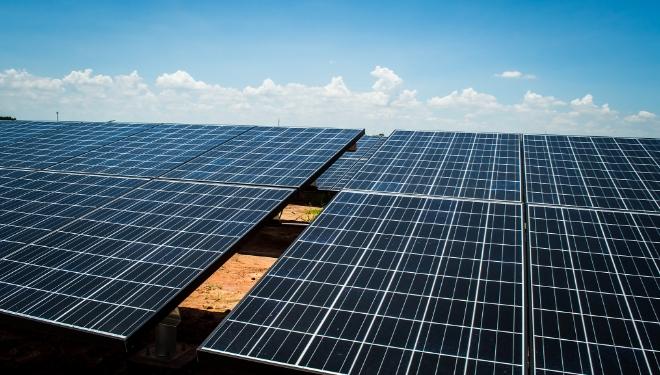
On July 29, sources within the industry revealed to Cailian Press that just days after the official implementation of the "General Rules for Cost Accounting Models in the Photovoltaic Industry" on July 27, the State Administration for Market Regulation (SAMR) will organize the first special guidance meeting on price compliance for the photovoltaic industry on July 31. The China Photovoltaic Industry Association (CPIA) and multiple core enterprises across the industrial chain will attend. This meeting also marks the first time regulatory authorities have organized a centralized industry-wide promotion since the introduction of the standard. The core objective is to promote the implementation of unified cost accounting rules by enterprises and rectify irrational low-price competition in the industry.
Covering Leading Enterprises Across the Entire Industrial Chain with All Links Participating to Benchmark Standards
According to sources familiar with the meeting, this event invites leaders from various sectors of the national photovoltaic industry, covering the entire manufacturing chain from polysilicon, wafers, and cells to modules. Dozens of companies will send one to two representatives each to uniformly learn cost accounting standards and clarify the red lines for price compliance.
The "General Rules for Cost Accounting Models in the Photovoltaic Industry" is a group standard compiled by the China Photovoltaic Industry Association under the guidance of the State Administration for Market Regulation and the Ministry of Industry and Information Technology. Relying on the framework of corporate accounting standards, the standard unifies the cost accounting scope, calculation coefficients, and models for the entire chain from silicon materials to modules. It addresses the long-standing industry pain points of fragmented cost statistical calibers and the inability to horizontally compare cost data between integrated manufacturers and specialized manufacturers. By standardizing depreciation accrual and cost allocation rules, it forms a standardized accounting system that is benchmarkable and verifiable. The compilation document mentions that in the past two years, the four major manufacturing sectors of the photovoltaic industry have continued to face profit pressure. A unified cost baseline is a necessary support for industry benchmarking, capacity regulation, and macro-industrial decision-making.
Industry Low-Price "Involution" Has Accumulated Problems for a Long Time, and Original Price Constraints Lack Enforceability
The campaign to "counter low-price involution" in the photovoltaic industry has lasted for more than a year. In July 2025, the Ministry of Industry and Information Technology held a symposium directly addressing disorderly low-price competition in the PV sector. In August of the same year, six departments jointly summoned industry enterprises, explicitly calling for a halt to loss-making order grabbing.
The root cause of this persistent industry ailment lies in the lack of a unified cost yardstick. Many companies have long bid below cost prices to seize orders. In October 2024, the industry association provided a reference cost price of 0.68 yuan/W for modules, but this was merely an industry initiative without hard binding force, making it difficult to eradicate the chaos of low-price dumping. Currently, operational pressure in the industry continues to be prominent. Among the 31 main photovoltaic companies that have released their semi-annual performance forecasts, 17 expect losses, with a total estimated loss range between 16.847 billion yuan and 19.556 billion yuan.
Unified Cost Yardstick Draws Red Lines for Competition, Ending the Pattern of "Bad Money Driving Out Good"
Industry analysis points out that the "General Rules" are equivalent to establishing a cost yardstick and competitive boundaries for the photovoltaic industry, promoting industry governance from corporate self-discipline to standardized institutional constraints. Gao Jifan, Chairman of Trina Solar, stated that unified accounting standards will provide a clear basis for determining low-price dumping. This will help enterprises actively resist accepting loss-making low-price orders, ensure reasonable profit margins, reverse the imbalanced situation where non-compliant, low-quality companies disrupt the market while compliant, high-quality companies are forced to concede profits, and guide the industry to break away from crude price wars.
This supporting price compliance guidance meeting will accelerate the implementation of standards across the industrial chain. Relying on a unified, transparent, and comparable cost accounting system, it will fundamentally alleviate the malignant price involution across the entire industrial chain and promote the return of the photovoltaic industry to a track of benign and orderly competition.
From:ChemNet

|
Recommended Suppliers |