service@chemindustry.com

|
 |
|
|
|
 |
News Details |
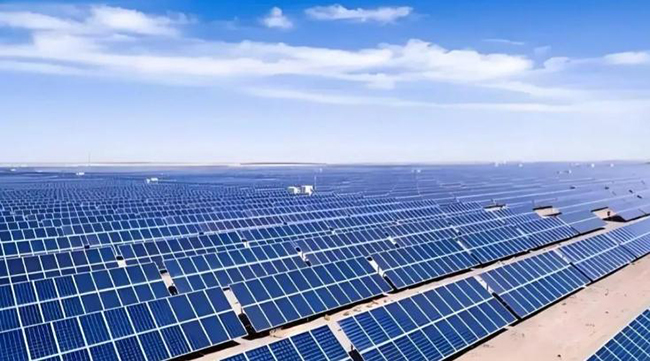
On August 7, it was reported that on August 6 local time, U.S. President Trump signed an executive order to officially impose minimum import prices + additional tariffs dual trade restrictions on imported polysilicon and its derivative products, pursuant to Section 232 of the Trade Expansion Act of 1962. This move aims to simultaneously support the development of domestic U.S. polysilicon, semiconductor, and photovoltaic supply chains. The new policy will officially take effect on December 4, 2026, including a 15% ad valorem tariff and tiered minimum import price standards, covering the entire chain of products such as polysilicon, silicon ingots, silicon wafers, and solar cells.
New Policy Sets up Dual Barriers, Photovoltaic Upstream Import Rules Comprehensively Tightened
This new policy establishes rigid price floors and tariff thresholds for the polysilicon industry chain, clarifying tiered price limit standards:
Minimum import price of $21 per kg for polysilicon, $100 per kg for polysilicon ingots and wafers, and $0.22 per watt for solar cells, combined with a 15% additional tariff. This significantly raises the cost for overseas products to enter the U.S. market, aiming to reshape the landscape of the domestic U.S. photovoltaic upstream supply chain.
Domestic Photovoltaic Giants Respond Urgently, Impact on Companies Shows Significant Divergence
In response to the latest U.S. trade policy, leading domestic photovoltaic companies have successively made public statements, with the degree of impact showing clear divergence.
Photovoltaic module leader Trina Solar stated that the company's main business is the sales of photovoltaic modules, and polysilicon is only an upstream raw material segment. Moreover, the company's scale of direct exports to the U.S. is relatively small, with overseas shipments mostly completed through cooperative channels. Taken together, the new policy has limited impact on the company's short-term operations.
The Board Secretary's office of photovoltaic leader JinkoSolar responded that the company is currently conducting a comprehensive assessment of the latest U.S. tariff policy, price limit rules, and subsequent implementation details. They will provide further explanations to the public once the assessment results are mature, and the market is advised to refer to professional analyses from third-party institutions.
In addition, reporters attempted to contact the Board Secretary's office of JASolar to understand the impact, but as of now, the calls have not been connected, and the company has not yet released a relevant response.
Industry Impact Forecast: Upstream Manufacturers Under Pressure, Component Export Buffer Space Relatively Large
Industry analysis points out that this new policy mainly targets the import link of upstream polysilicon raw materials in the photovoltaic industry, having a more direct impact on companies that export silicon materials and wafers to the U.S. Meanwhile, most domestic module companies rely on overseas cooperation models and localized channel layouts, combined with a non-direct export structure, so the pressure on their short-term performance is relatively limited.
Subsequently, as the implementation of the new policy approaches, domestic photovoltaic enterprises may continue to adjust their export structures, optimize overseas production capacity layouts, and rely on compliant channels to hedge against the export pressure caused by tariffs and price limits.
From:ChemNet
|
Recommended Suppliers |